I am creating a multimedia lesson using the displays in the History and Anthropology Museum in Rivas, Nicaragua. I am taking photos and videos of the wall. I am then typing up the wall messages and then translating it into English. Afterward, I am going to use the vocabulary words from the translated pieces as part of my English and Spanish lessons.
The Symbols of Power Wall at the History and Anthropology Museum in Rivas, Nicaragua. 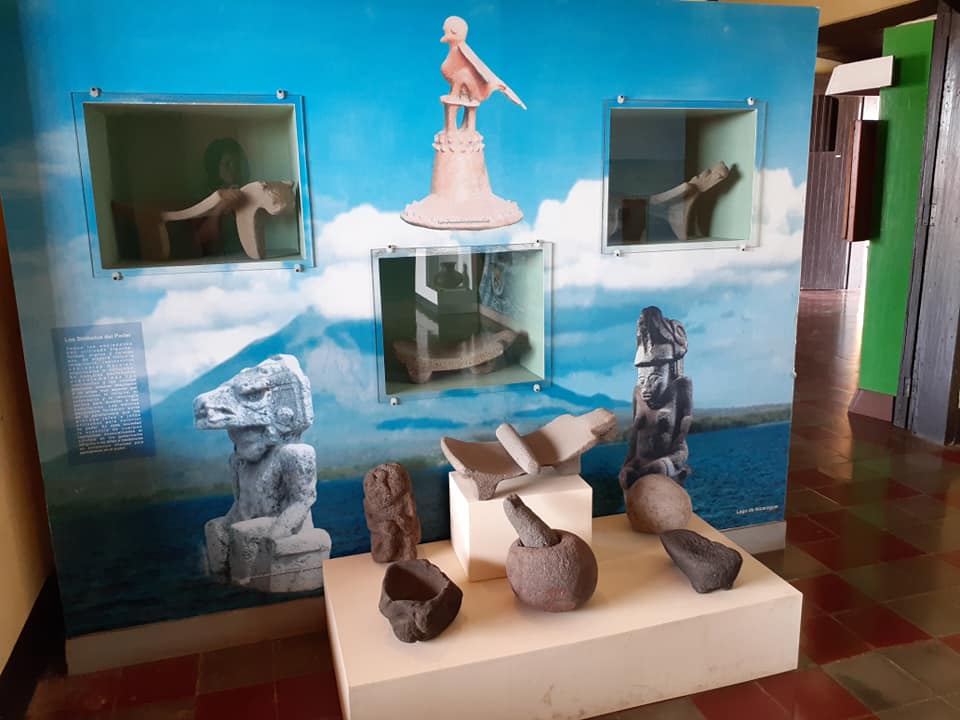
Los Simbolos del Poder
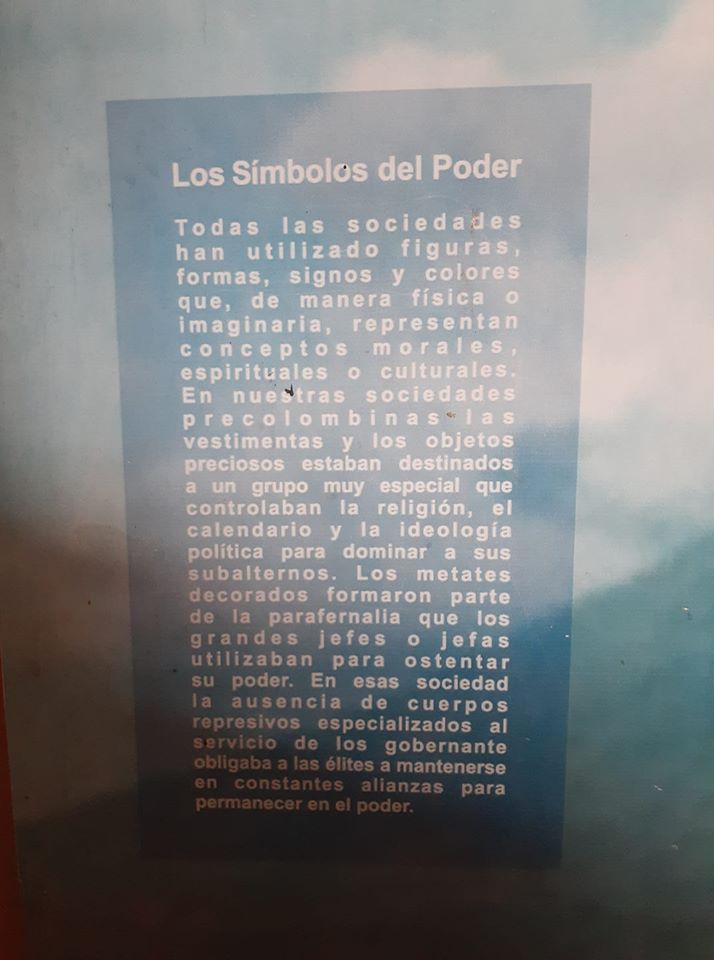
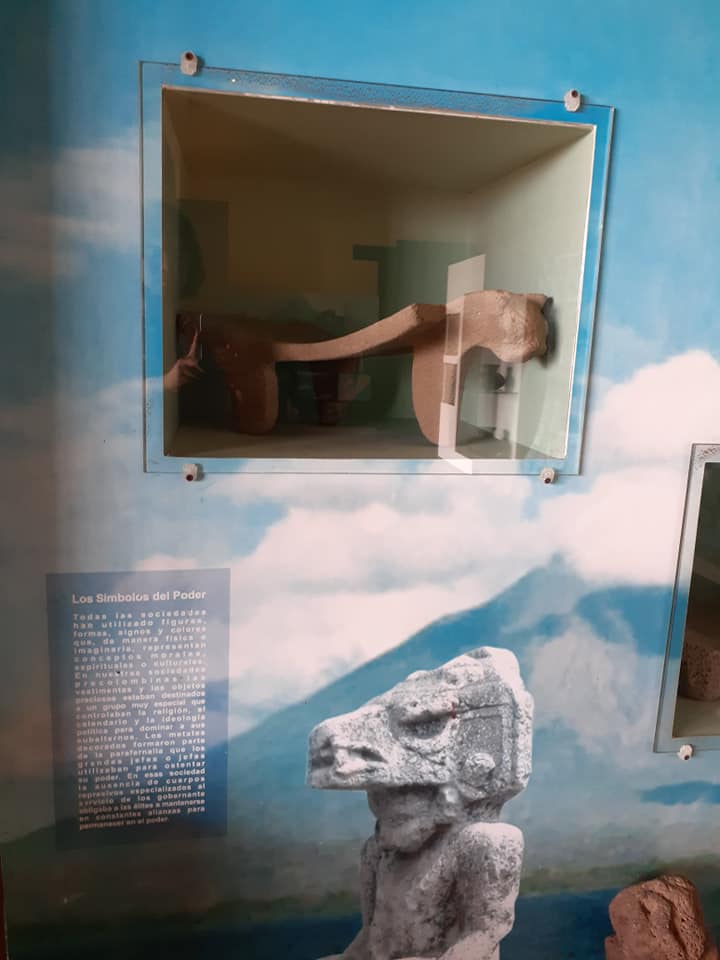
Todas las sociedades han utilizado figuras, formas, signos, y colores que, de manera física o imaginaria, representan conceptos morales, espirituales o culturales. En nuestras sociedades precolombinas las vestimentas y los objetos preciosos estaban destinados a un grupo muy especial que controlaban la religión, el calendario y la ideología política para dominar a sus subalternos. Los metates decorados formaron parte de la parafernalia que los grandes jefes o jefas utilizaban para ostentar a su poder. En esas sociedad la ausencia de cuerpos reprisivos especializados al servicio de los godernante obligaba a las elites a mantenerse en constantes alianzas para permanecer en el poder.
Here is a video of me reading the excerpt in Spanish.
The Symbols of Power
All societies have used figures, shapes, signs, and colors that, in a physical or imaginary way, represent moral, spiritual or cultural concepts. In our pre-Columbian societies, clothing and precious objects were destined for a very special group that controlled religion, calendar and political ideology to dominate their subordinates. The decorated metates were part of the paraphernalia that the great bosses used to hold their power. In these societies, the absence of specialized repressive bodies at the service of the governors forced the elites to remain in constant alliances to remain in power.
 ThereseInRivas