I am creating a multimedia lesson using the displays in the History and Anthropology Museum in Rivas, Nicaragua. I am taking photos and videos of the wall. I am then typing up the wall messages and then translating it into English. Afterward, I am going to use the vocabulary words from the translated pieces as part of my English and Spanish lessons.
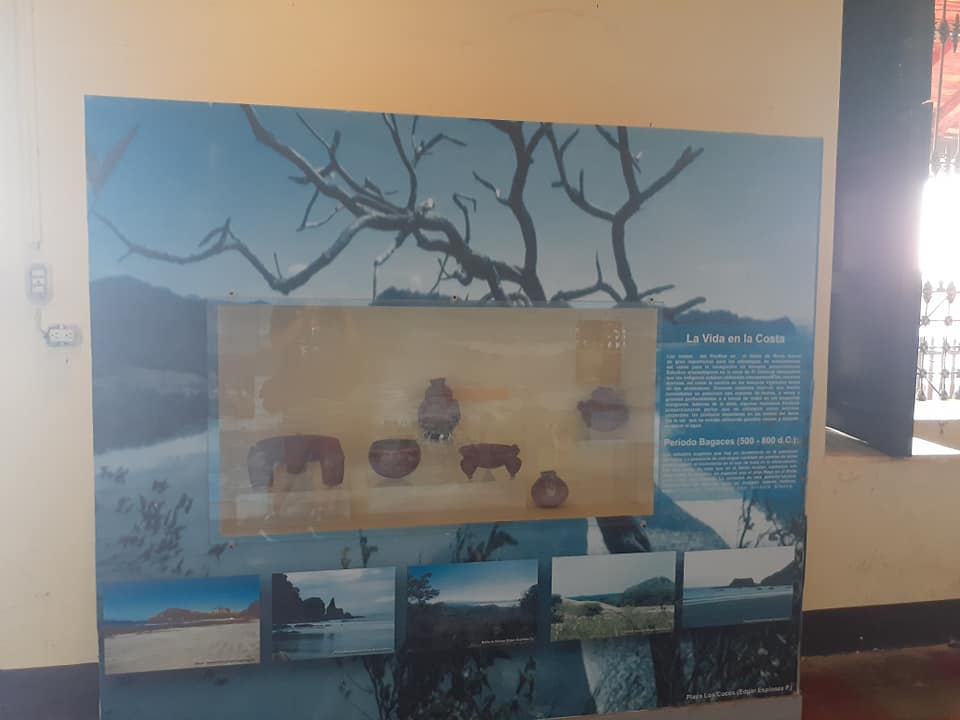
La Vida en La Costa
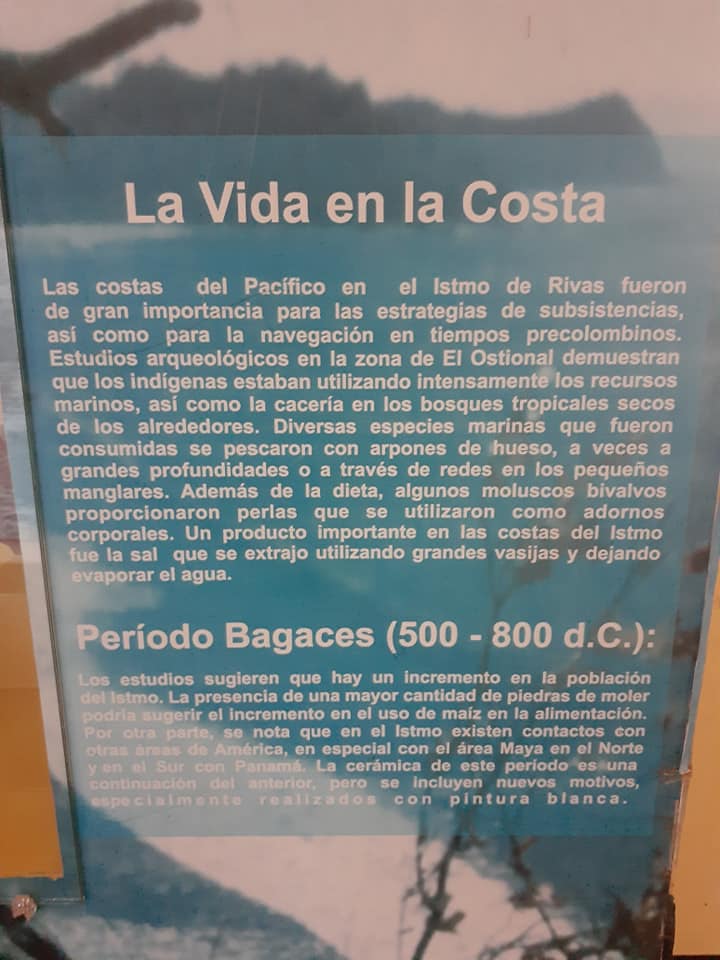
Las costas del Pacifico en el Istmo de Rivas fueron gran importancia para las estrategias de subsistencias, asi como para navegacion en tiempos precolombinos. Estudios arqueologicos en la zona de El Ostional demuestran que los indigenas estaban utilizando intensamente los recursos marinos, asi como la caceria en los bosques tropicales secos de los alrededores. Diversas especies marinas que fueron consumidas se pescaron con arpones de hueso, a veces a grandes profundidades o a traves de redes en los pequenos manglares. Ademas de la dieta, algunos moluscos bivalvos proporcionaron perlas que se utilizaron como adornos corporales. Un producto importante en las costas del Istmo fue la sal que se extrajo utilizando grandes vasijas y dejando evaporar el agua.
Here is a video of me reading the excerpt in Spanish.
Life on the Coast
The Pacific coasts in the Isthmus of Rivas were of great importance for subsistence strategies, as well as for navigation in the pre-Columbian times. Archaeological studies in the area of El Ostional show that indigenous people were using marine resources intensively, as well as hunting in the surrounding dry tropical forests. Various marine species that were consumed were fished with bone harpoons, sometimes at great depths or through nets in small mangroves. In addition to the diet, some bivalve molluscs provided pearls that were used as body ornaments. An important product on the coast of the Isthmus was salt, which was extracted using large vessels and allowing the water to evaporate.
Periodo Bagaces (500-800 d.C.)
Los estudios sugieren que hay un incremento en la poblacion del Istmo. La presencia de una mayor cantidad de piedras de moler podria sugerir el incremento en el uso de maiz en la alimentacion. Por otra parte, se nota que en el Istmo existen contactos con otras areas de America, en especial con el area Maya en el Norte y en el Sur con Panama. La ceramica de este periodo es una continuacion del anterior, pero se incluyen nuevos motivos, especialmente realizados con pintura blanca.
Here is a video of me reading the excerpt in Spanish.
Bagaces Period (500-800 A.D.)
Studies suggest that there is an increase in the population of the Isthmus. The presence of a greater amount of grinding stones could suggest an increase in the use of corn in the diet. On the other hand, it is noted that in the Isthmus there are contacts with other areas of America, especially with the Maya area in the north and in the south with Panama. The ceramics of this period is a continuation of the previous one, but new motifs are included, especially made with white paint.
 ThereseInRivas